
Camping Essentials for Beginners, on a Budget
The gear that decides whether a cold night is uncomfortable or dangerous costs very little. Three cheap things to pack before the expensive kit.
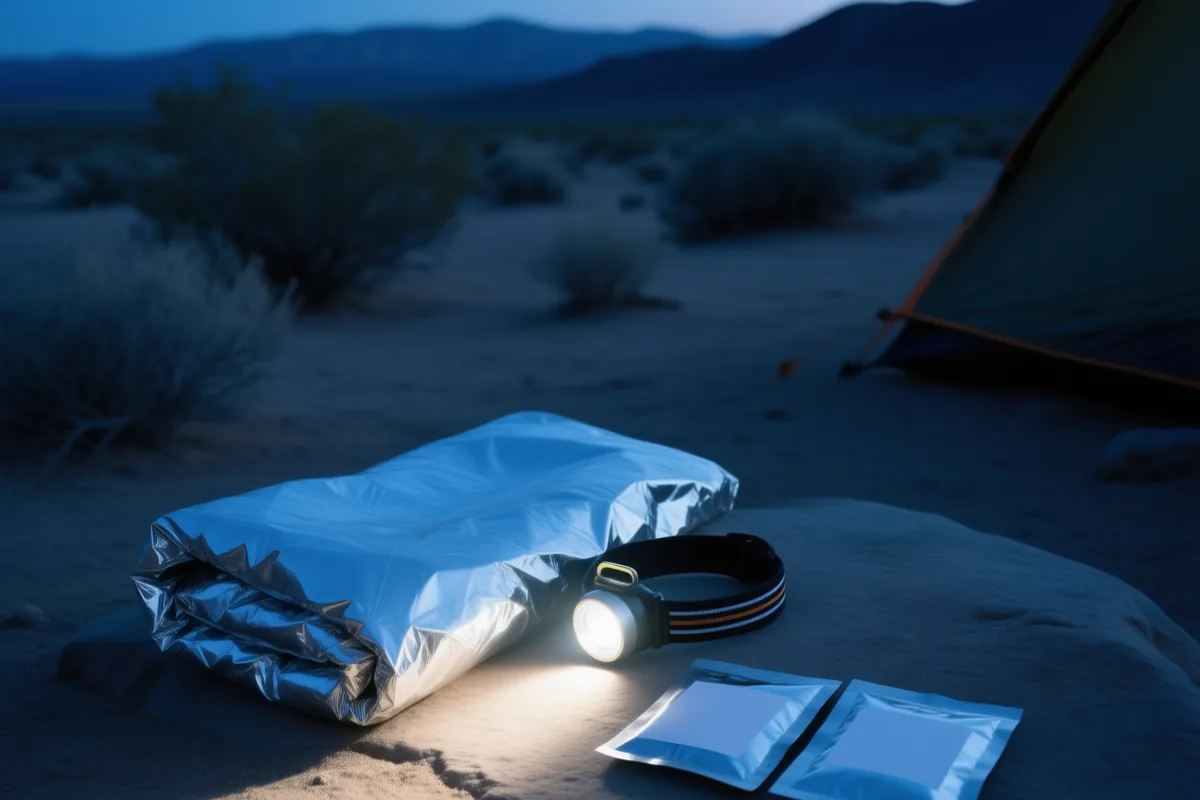
Skaði chose the mountains over the sea. Anyone who camps in the desert makes a similar trade: brilliant days, and nights that get colder than the afternoon suggests they have any right to.
The interesting thing about camp gear is that the items which decide whether a bad night is uncomfortable or dangerous are almost all cheap. The expensive kit buys comfort. These three buy margin.
Light you can work by
The first thing anyone notices on their first trip is that everything takes two hands, and a torch takes one of them. Cooking, pitching, finding the thing you dropped, checking under the bonnet — all of it goes faster with a headlamp and slower with a flashlight held in your teeth.
Two features matter more than brightness, which is where the marketing goes. A red mode, because white light destroys everyone’s night vision for about twenty minutes and makes you the least popular person in camp. And a tilting head, so the beam points at what your hands are doing instead of the horizon.
Buy them in pairs. Headlamps are the single most commonly forgotten item, and the spare in the glovebox is worth more than the extra lumens.
Heat that needs nothing
Air-activated warmers are unglamorous and very hard to beat on the metric that counts: they work with no power, no fuel, no moving parts, and no way to fail quietly in a pack.
The desert case for them is specific. A day in the high nineties gives people a wildly wrong impression of what three in the morning will feel like at elevation, with no cloud cover to hold the heat in. A sleeping bag rated to a temperature is rated for surviving it, not for sleeping comfortably in it — and a warmer at the foot of the bag closes most of that gap.
One safety note that is not marketing caution: do not sleep with one directly against skin. They run for hours, and low-temperature burns happen slowly enough that you sleep through them.
A blanket that is not really a blanket
Mylar blankets are the item people buy, put in a drawer, and never think about again — which is precisely correct use. They cost almost nothing, weigh almost nothing, and reflect most of your radiated heat back at you.
Be clear about what they are for. They are emergency equipment: loud, fragile at the corners, and they trap condensation against you over a long night. Nobody enjoys one. But the scenario they exist for is a breakdown on a road with no traffic and a temperature dropping, and in that scenario a two-ounce sheet in the door pocket is worth more than everything else in the vehicle.
Put them where the emergency will be. One in each vehicle, one in the day pack. Not in the garage with the camping bins.
What we would skip early on
Giant “survival kits” with sixty pieces. The count is the selling point, and most of the count is filler — a compass that does not settle, a whistle, wire saws nobody has used. Buy the three or four things you would actually reach for.
Anything that needs charging to be a safety item. Rechargeable is fine for convenience gear. For the things that matter when everything has gone wrong, prefer the ones with no battery at all.
How we checked this
We have not bought these ourselves. This page is built the way the rest of the site is: owner reviews read over time — the long-term ones especially, where headlamp battery complaints and torn mylar corners actually show up — the makers’ own specifications, and published safety guidance on air-activated warmers and hypothermia. Where a detail is the reason something works, we have said which detail and why.
Prices change constantly, so we do not print them. Check the current price on Amazon.
The picks
GearLight rechargeable LED headlamp (2-pack)
A headlamp beats a torch for the simple reason that camp chores need two hands. Buy the two-pack: the second one lives in the truck, and the spare is the one that matters when the first is flat.
- Best for
- Cooking after dark, tent setup, night walks, and anything under a vehicle bonnet.
- Watch out
- Rechargeable means nothing if you forget the cable. Check whether yours takes batteries as a backup, and use the red mode around camp — white light wrecks night vision for everyone.
HotHands air-activated hand warmers (40 pairs)
Single-use, no batteries, nothing to fail, and roughly ten hours of heat from something that fits in a glove. Desert nights drop far further than people expect after a hot day.
- Best for
- Cold mornings, sleeping bags that are rated optimistically, and gloves that stopped being enough.
- Watch out
- They need air to work, so opening the pack early does nothing. Never put them directly against bare skin for long periods — a low burn over hours is a real risk while you are asleep.
Swiss Safe mylar emergency blankets (4-pack)
Two ounces, packs to the size of a phone, and reflects most of your body heat back at you. The cheapest meaningful safety item you can carry, which is exactly why it gets left out of the kit.
- Best for
- Vehicle emergency kits, day packs, and anyone driving remote roads alone.
- Watch out
- They are loud, they tear at the corners, and they trap moisture against you over a long night. This is emergency equipment, not bedding.
We do not list prices; they change daily. The button opens the current Amazon page.