
The Ender 3 V3 Plus, and the Filament Worth Rebuying
One printer somebody here actually runs, and the filament brand they buy again without thinking about it. Plus the size question people get wrong first.
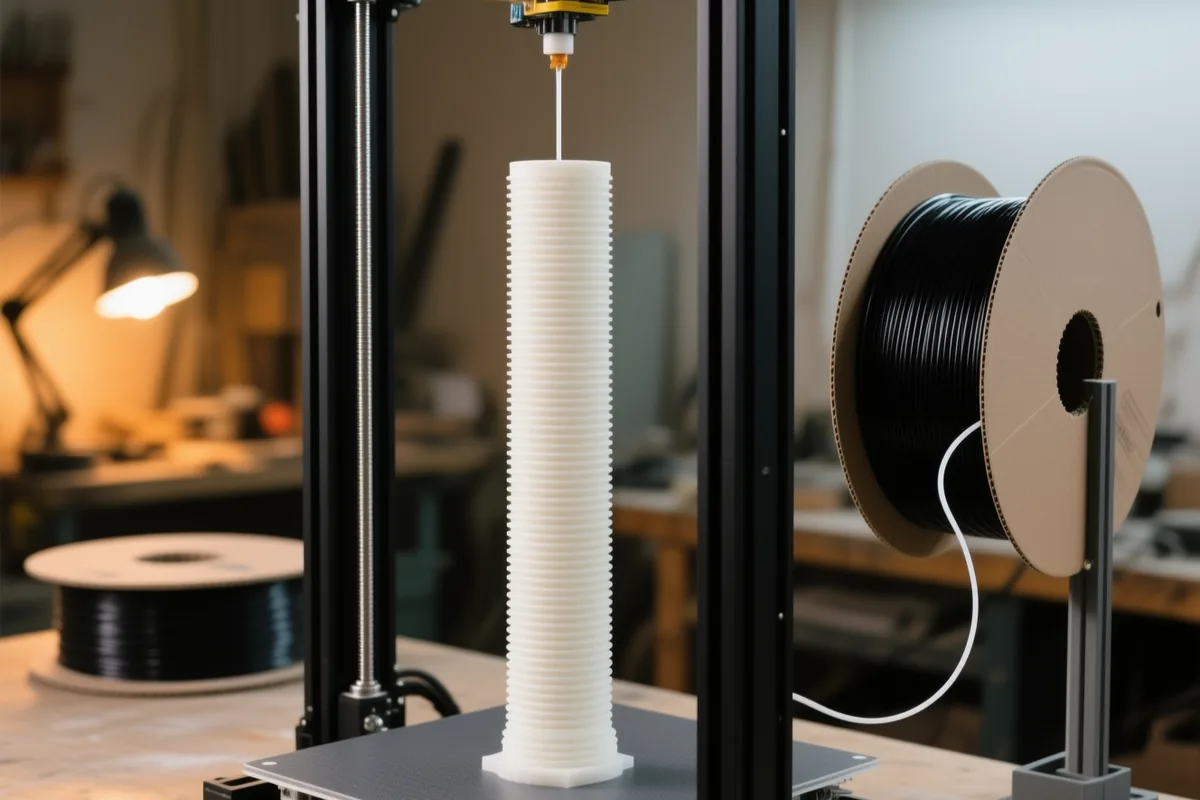
Gleipnir was the ribbon that held the wolf: soft, thin, and stronger than the iron chains that failed. Good making is often like that. The machine matters less than what you feed it.
What this is, and what it is not
Somebody on our team runs a Creality Ender 3 V3 Plus and has done for a while. Their verdict, in full: “it’s really good machine now.”
That is not a review, and we are not going to inflate it into one. What we can tell you honestly is which machine is in use, which filament gets bought again and again, and the handful of things that are worth knowing before you spend the money. We have not run a torture test, we have not measured tolerances, and if you want that, better sources exist.
What we can offer is the thing those sources usually cannot: what a real person keeps buying once the novelty has worn off.
The size question, which is the one people get wrong
The Ender 3 V3 comes in more than one machine and they are not interchangeable. The important difference is the build plate:
- Plus — roughly 300mm square
- SE — roughly 220mm square
That sounds like a detail. It is the single most common regret in entry-level 3D printing. A 220mm plate handles most of what a beginner prints, right up until the first project that does not fit — a helmet piece, a large bracket, a model in one part instead of four glued together. Splitting a print into sections is a real cost in time and in finish quality.
The Plus is the dearer machine. If everything you intend to make fits in a shoebox, buy the smaller one and spend the difference on filament. If you are not sure yet, the size is the thing you cannot add later.
Why the filament brand is the real recommendation
Here is the part worth paying attention to: the printer was chosen once. The filament has been chosen over and over.
Overture is what gets bought, with Creality sometimes. That is a stronger signal than any single review, because a filament that jams, snaps or arrives badly wound gets abandoned after one spool. Repeat purchase is the whole verdict.
What actually separates good filament from bad is unglamorous:
- Diameter consistency. Filament that varies along its length gives you over- and under-extrusion in the same print.
- Spool winding. A badly wound spool tangles, and a tangle halfway through a nine-hour print ruins it.
- Moisture. PLA pulls water out of the air, and wet filament prints rough and brittle. This is the most common cause of a print that used to work and suddenly does not.
None of that shows up in photographs, which is why filament reviews are mostly useless and repeat buying is not.
Which Overture to get
- Standard High Speed PLA for everyday printing. Black hides layer lines better than anything else.
- Matte for display pieces — it scatters light and disguises layering unusually well.
- PLA+ for parts that get used rather than admired. Tougher, less brittle, wants a bit more heat.
Buy in bundles if you have somewhere dry to keep it. Buy singles if you do not, because a spool that sits open for months is a false economy.
The honest summary
One machine, chosen once, still liked. One filament brand, bought repeatedly, which is the recommendation that actually means something. And one piece of advice worth more than either: decide how big you need to print before you buy, because that is the part you cannot change afterwards.
The picks
Creality Ender 3 V3 Plus 3D printer
A CoreXZ machine with auto levelling and a direct drive extruder, and a build plate around 300mm square instead of the 220mm on the smaller models. That size difference is the thing people wish they had paid for later.
- Best for
- Anyone printing pieces bigger than a mug, or several parts in one go.
- Watch out
- It is the larger, dearer model in the line. If everything you print fits in a shoebox, the SE does the same job for less.
Overture High Speed PLA filament, 1.75mm, 1kg, black
The standing rebuy. Neatly wound spools and consistent diameter are the boring qualities that decide whether a long print finishes, and this is the one that gets bought again without deliberation.
- Best for
- Everyday printing, and black hides layer lines better than any other colour.
- Watch out
- PLA absorbs moisture from the air. An opened spool left out in a humid month prints worse than a fresh one — bag it with desiccant between jobs.
Overture matte PLA, 2 kg bundle
Matte finish scatters light instead of reflecting it, which hides layer lines remarkably well on display pieces. Buying two kilos at once works out cheaper per spool than singles.
- Best for
- Anything that gets looked at rather than used — models, props, gifts.
- Watch out
- Matte filaments are usually slightly more abrasive than standard PLA. On a stock brass nozzle that is fine; it is worth knowing before you print a whole shelf of it.
Overture High Speed PLA+ filament, 1.75mm, 1kg
PLA+ trades a little brittleness for toughness, so parts that take stress — clips, brackets, hinges — survive being used rather than snapping at a layer line.
- Best for
- Functional parts, not decorative ones.
- Watch out
- It usually wants a slightly hotter nozzle than standard PLA. Print one test piece before committing a long job to old settings.
We do not list prices; they change daily. The button opens the current Amazon page.