
The Fabric Chart Is Felt and Tulle
Six felt listings and four tulle in the top twenty of Amazon's craft fabric chart, nearly all under three thousand ratings. The thinness is itself the finding.
The dwarves made Gleipnir out of six things that do not exist: the sound of a cat’s footfall, the beard of a woman, the roots of a mountain, the sinews of a bear, the breath of a fish, and the spittle of a bird.
The old explanation for why none of those things can be found now is that the dwarves used them all up.
It came out soft as a ribbon and thin as silk, and it was the strongest thing ever made. Nobody who has watched a four-year-old hold a felt star together with a glue stick would find that surprising.
What is actually on the chart
Amazon’s Craft and Hobby Fabric chart, read this morning. Twenty products.
- Felt, six times — at one, four, five, seven, sixteen and twenty.
- Tulle, four times — at three, six, thirteen and eighteen.
- Quilting cotton precuts, six times — squares and fat quarters at two, nine, ten, twelve, fourteen and nineteen.
- Four singles: satin, muslin, stretch velvet, cotton poplin.
Half the chart is two materials, and both of them are materials you cut and glue rather than sew. This is not a sewing chart. It is a school-holiday, party-decoration, first-project chart, and the buyer it describes owns scissors and a glue stick and possibly not a machine.
The interesting part is how small the numbers are
The number one product on this chart has one thousand four hundred and eighty-five ratings.
Put that beside any other chart on this site. The most-reviewed product on the laundry chart has two hundred and ninety-three thousand. The most-reviewed dog product has two hundred and forty-seven thousand. A single kitchen scale has one hundred and seventy-six thousand. On the craft fabric chart, only two of the top twenty clear five thousand ratings, and ten of them are under one thousand five hundred.
A thin chart is a chart where rank is cheap. On a category this small, the difference between number one and number eleven can be a few hundred orders a week, a sale price, or an ad spend — not a verdict from a hundred thousand buyers. The rank still tells you what the category is about, which is the useful part here. It tells you much less about which listing inside it to trust.
That is not a criticism of the chart. It is the single most useful thing to know before shopping off it.
Buy the format, not the rank
Because rank is weak here, the decision that actually matters is the one the chart makes easy to get wrong: format.
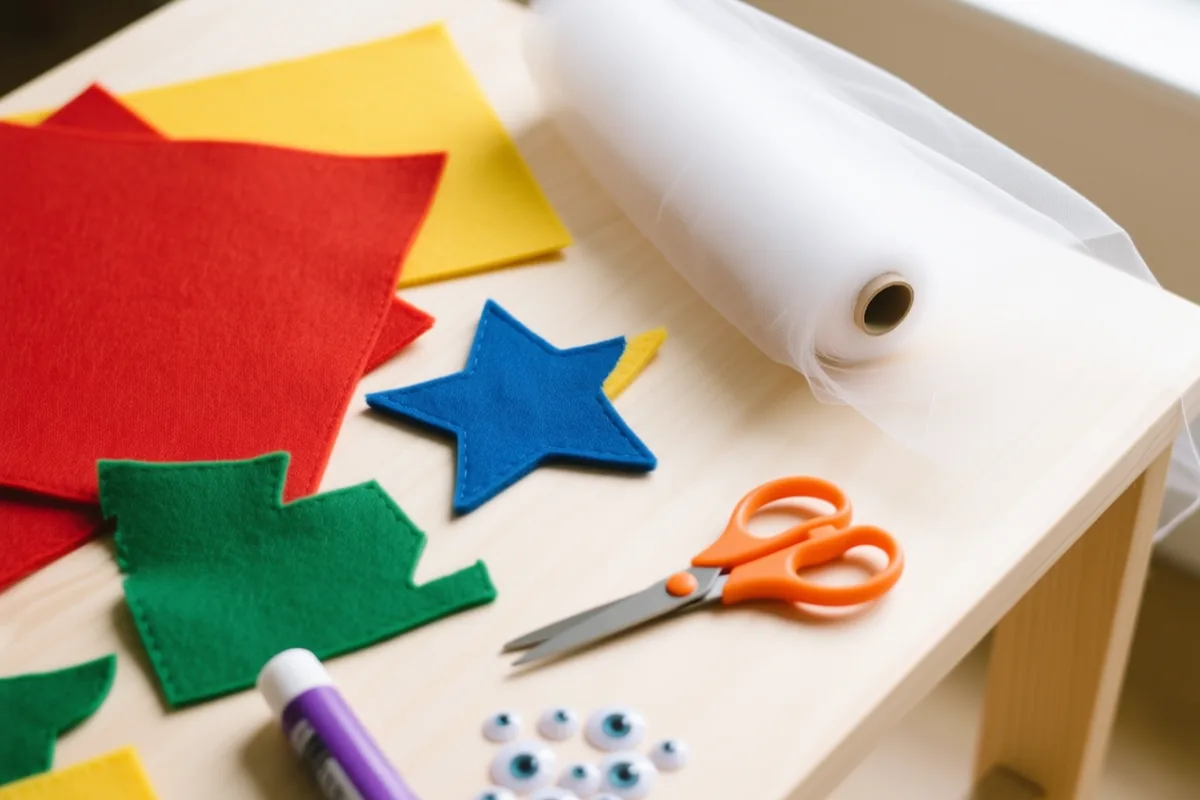
Felt comes as small squares or long rolls, thin or thick, and the two do different jobs — one is for many colours in small pieces, the other is for one colour in a piece big enough to matter. Tulle comes as a narrow spool or a wide bolt, and the same word covers both. Cotton comes as ten-inch squares or fat quarters or yardage, and a bundle of pre-cut squares is useless for anything that needs a continuous piece.
Every one of those is a dimensions question, and the dimensions are in the title of every listing on this chart. Read them before you read the star rating.
Where these picks came from, honestly
All four read off Amazon’s own Craft and Hobby Fabric chart this morning, rank, rating and review count together, best-sellers first. All four are research picks — nobody here has bought these particular listings. The observation about rank being cheap on a low-volume chart comes from comparing this chart’s review counts against the other six we read every day.
The one honest warning
Number two on this chart, a twenty-piece set of quilting fabric squares, carries 3.8 stars on one thousand four hundred and seventy ratings. Number twelve, a sixty-piece Halloween squares set, carries 3.0 stars on one hundred and ninety-five.
A 3.0 in the top twelve of a chart is close to unheard of on any of the bigger categories. It happens here for the reason above: the volume is low enough that a listing can rank well while a third of its buyers are unhappy. On the laundry or pet chart, that product would be nowhere near the front page.
The specific complaint behind low-rated precut fabric is nearly always the same two things — the colour does not match the photograph, and the “cotton” is thinner or more polyester than expected. Both are unfixable after delivery and neither shows up in a rank.
On a chart this small, read the one-star reviews before the rank. It is the one category we cover where that is genuinely the better order.
The picks
XSEINO soft felt fabric sheet, 12 rolls, 8 by 35 inch, 1.4mm
Number one on Amazon's Craft and Hobby Fabric chart this morning, 4.7 stars across one thousand four hundred and eighty-five ratings. Sold as rolls rather than flat squares, which is the format difference that matters: 1.4mm is thick enough to hold a shape when you cut it, and 8 by 35 inches is long enough to get a banner, a bag panel or a set of matching pieces out of one colour instead of piecing it.
- Best for
- Anything that has to stand up on its own — ornaments, finger puppets, felt food, banner letters — and any project where you need more than a four-inch square of one colour.
- Watch out
- Rolled felt arrives curled and stays curled for a day or two under something flat. Thicker felt also blunts child safety scissors fast, so this is the adult-cuts, child-glues end of the material.
42-piece felt fabric sheets, 4 by 4 inch, assorted colours, 1mm
Number five, 4.4 stars across nine thousand nine hundred and seventy-two ratings — nearly seven times the reviews of the chart's number one, and by far the most-reviewed thing on this chart. Forty-two small squares in forty-two colours is the classroom format, and the review count says so: this is what gets bought when a project needs one small piece of every colour and nobody cares about the yardage.
- Best for
- Kids' craft, classroom sets, small appliqué, and testing a colour before committing a whole sheet to it.
- Watch out
- 1mm is noticeably floppier than the rolls above and four inches is genuinely small — it is a piece, not a panel. Its 4.4 is the honest score of a product that a lot of people buy expecting fabric and receive craft felt, which is a pressed non-woven and behaves nothing like cloth.
IONTACH white tulle ribbon roll, 6 inch by 100 yards
Number three, 4.6 stars across two thousand five hundred ratings, and the highest-ranked of four separate tulle listings in the top twenty. Six inches wide by a hundred yards is a spool, not a bolt — this is the tulle that becomes bows, wreath poufs, chair ties and gift wrap, and the length is why it holds its rank: a hundred yards outlasts several occasions.
- Best for
- Bows, wrapping, wreaths, party decor, and pew or chair ties.
- Watch out
- Six inches will not make a tutu, a veil or a backdrop, and this is the single most common wrong purchase on this chart. If the project has to cover a person or a table, you want the bolt below, not this.
White tulle fabric roll, 54 inch by 10 yards
Number six, 4.7 stars across two thousand four hundred ratings — the same material as the spool above in the shape that does the other half of the jobs. Fifty-four inches is a bolt width, which means one cut gives you a full skirt length or a table drape without seaming two pieces together.
- Best for
- Tutus, veils, backdrops, table skirting, canopies, and anything measured in a person's height rather than a ribbon's width.
- Watch out
- Ten yards at bolt width sounds like a lot and disappears fast — a gathered tutu eats three to four yards on its own because gathering is what makes it stand out. Work out the gather ratio before you order, not after.
We do not list prices; they change daily. The button opens the current Amazon page.