
The Sewing Chart Has No Thread on It
Amazon's Sewing Products chart has no thread, no fabric and no machine in its top twenty. It has three rhinestone listings and a tape measure for people.
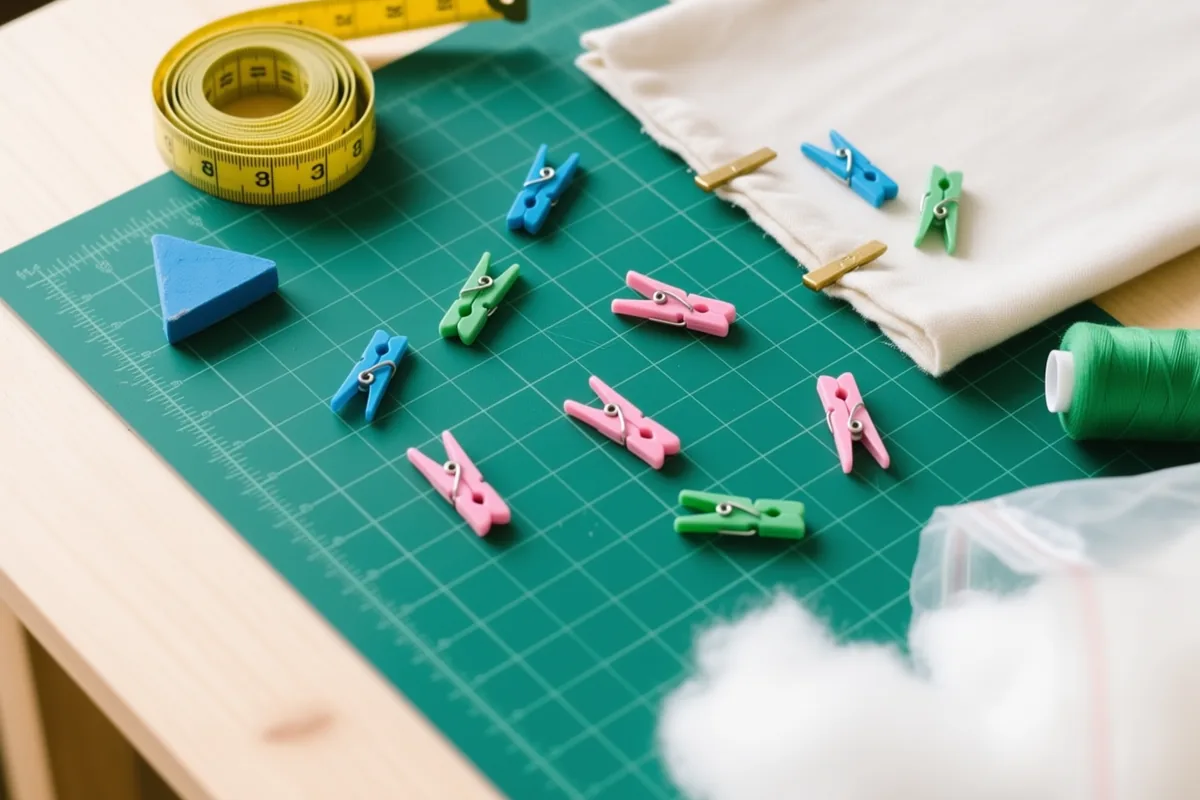
The Norns are described as measuring and cutting, which is a strange picture until you notice it is not a metaphor about fate at all. It is a description of a workroom.
Someone measures. Someone cuts. Someone joins.
What is not on this chart
Amazon files sewing under node 12899091, and we had it in our own notes as a category that might not exist. It exists. Here is what is absent from its top twenty:
- No thread. Not one spool.
- No fabric. Not a yard.
- No sewing machine, and no machine part.
- No scissors, unless you count a rotary cutter at number nineteen.
Now here is what is present: safety pins twice, hand-sewing needles twice, sewing clips, tailor’s chalk, elastic, iron-on hem tape, a threader, a cutting mat, a rotary cutter — and three separate rhinestone listings, a roll of heat-transfer vinyl, and a bag of stuffing.
This is a notions chart with a craft chart leaking into it. It sells the small things you run out of, not the things you sew with.
Why the big items vanish
The same reason cots vanish from the camp bedding chart and mulch vanishes from the soil chart: a best-seller rank counts units, and units favour the cheap and the repeat-bought.
A sewing machine is bought once a decade. Fabric is bought in a shop where you can feel it, or from a specialist. Thread is bought to match, one colour at a time, from a wall of four hundred choices that no single listing can win.
Pins, clips, needles and stuffing are bought constantly, by everyone, in packs of a hundred. So the chart fills with them.
The practical version: this chart is a restock list, not a starter list. It will tell you what you will run out of. It will not tell you how to begin.
The rhinestone problem
Rhinestones are at number one, number twelve and number fourteen. Heat-transfer vinyl is at number eleven with 40,830 ratings.
None of that is sewing. It is decoration applied to a finished garment with heat or glue, and it is filed here because Amazon’s category tree puts the sewing aisle next to the embellishment aisle.
It is worth naming because of what it does to a search. Type “sewing supplies for beginners”, buy the top result, and a box of 1,440 flat-back crystals arrives — a perfectly good product that will not help you hem a pair of trousers.
What is actually worth buying here
If you strip the chart back to things a person learning to sew will genuinely use:
- Clips or pins — clips for anything a pin marks, pins for everything else.
- A cutting mat, if and only if you own a rotary cutter. They are one purchase, not two.
- Chalk or a marking tool. Number thirteen, 10,349 ratings, and the cheapest way to stop guessing.
- Needles. Two listings on this chart, both large-eye sets, which tells you what people actually search for.
- Stuffing, if you make soft things — and nothing else on this list runs out as fast.
Note what that leaves out: the machine, the fabric and the thread, all of which you need first and none of which this page can help you choose.
Where these picks came from, honestly
All four read off Amazon’s own Sewing Products chart this morning — node 12899091 — rank, rating and review count together, best-sellers first. All four are research picks; we own none of them. The absences were checked by reading all twenty rows, not by searching for what we expected to find. Four products on this chart tie at 4.8 stars, so none of them is “the highest-rated” and none is described that way here.
The one honest warning
A chart like this quietly teaches you that sewing is a supplies problem, and it is not. It is a machine-and-practice problem, and the supplies are the cheap part.
The concrete version: the single most common reason a beginner gives up is tension trouble and skipped stitches on a machine that has never been threaded correctly or had its needle changed. A needle is meant to be replaced roughly every eight hours of sewing, and almost nobody does it. That failure feels like “I am bad at this” and is actually “this needle is blunt”.
None of the twenty products above fixes that. Two of them — the needles at sixteen and eighteen — are hand-sewing needles, which are a different object entirely from a machine needle, and the listings do not always make that obvious.
So the warning is about the chart itself: it is an excellent restock list and a misleading shopping list, and if you are starting out, the thing to buy is not on it.
The picks
Poly-Fil Fairfield Original fiber fill stuffing, 32 oz
Ranked fourth, 4.8 stars across 50,843 ratings — one of four products tied at the top rating on this chart, and the third-largest review count on it. Polyester stuffing for cushions, toys and anything that needs to be soft in the middle. It is here because stuffing is a consumable and everything else on this chart is not.
- Best for
- Amigurumi, plush toys, re-stuffing flattened cushions, and anyone who has discovered that a bag of stuffing goes nowhere.
- Watch out
- Stuffing is sold by weight and used by volume, and a 32 oz bag fills far less than people expect — roughly one large cushion, or a handful of small toys. Buy more than you think, and pull it apart in small tufts rather than pushing in lumps, or the finished piece is bumpy.
Otylzto sewing clips, 100 pack, assorted colours
Ranked fifteenth, 4.8 stars across 13,152 ratings, tied for the highest rating here. Sprung plastic clips that hold two layers together where you would otherwise use a pin. For anything a pin damages or will not go through — leather, vinyl, laminated cotton, thick quilt sandwiches — they are not a preference, they are the only option.
- Best for
- Quilt binding, bag making, knits, and anyone who has stood on a dropped pin once.
- Watch out
- Clips only grip near an edge; they cannot hold the middle of a piece the way a pin can. Most people end up using both, and the flat side is meant to sit against the machine bed — clipped the other way round they foul the presser foot.
anezus self-healing rotary cutting mat, 12 x 18 in
Ranked seventeenth, 4.7 stars across 21,126 ratings — the second-largest count in the bottom half of this chart. A double-sided five-ply mat with a printed grid. If you own a rotary cutter you need one of these, because the cutter is designed to run into a surface that closes behind it.
- Best for
- Quilting, cutting straight lines in fabric, and protecting a table you like.
- Watch out
- 12 by 18 inches is a small mat. It is a good desk size and a frustrating quilting size — quilters generally want 24 by 36. And a self-healing mat left in a hot car or in direct sun warps permanently and never lies flat again.
Soft tape measure, double scale, 60 in
**Ranked sixth and the most-reviewed product on the entire chart at 67,278 ratings**, 4.8 stars. It is also the clearest evidence of what this chart is: the listing sells it for tailoring, for body measurement and for medical use, and a large share of those sixty-seven thousand buyers were not sewing anything.
- Best for
- Measuring a body, a curve, or anything a rigid rule will not follow.
- Watch out
- Cheap vinyl tapes stretch with age and stop agreeing with themselves — check a new one against a steel rule, and replace it when the numbers drift. Also confirm which scale you are reading; double-scale tapes have inches on one side and centimetres on the other, and the mistake is expensive in fabric.
We do not list prices; they change daily. The button opens the current Amazon page.