
Every Board Game in the Top Five Is Decades Old
The board game chart is not where new games go. The top of it is four titles that have been in print since before most of their buyers were born.
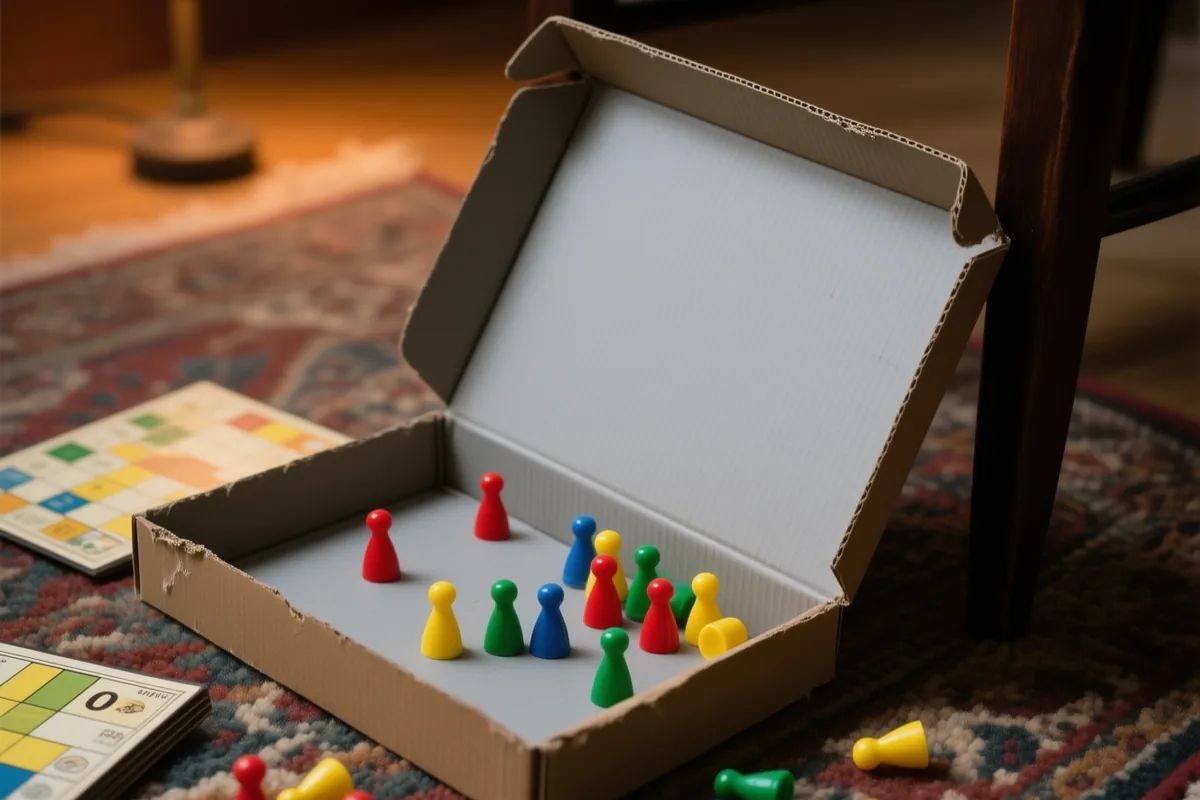
Hnefatafl was the board game of the Norse world for something like six hundred years. Boards turn up in graves; the sagas have people playing it, arguing about it, and using it as a metaphor. Then chess arrived from the south and it was gone inside a couple of generations.
Six hundred years, and then a better game showed up. That is the fair version of what follows.
The chart is a museum
Amazon’s board game best-seller list is ranked by units sold. The top five today: Candy Land, Sorry!, Trouble, Connect 4, and a Catan edition.
The first four have been in continuous print for somewhere between fifty and ninety-odd years. The chart also has Guess Who at seven and Monopoly at eight — both decades old. The genuinely modern titles sit below them, and the gap in review counts is the tell: Codenames has a few hundred, Hues and Cues about ten thousand, against thirty to forty thousand each for Candy Land, Sorry! and Trouble.
Why the old ones win a sales chart
This is not a claim that the old games are better. It is worth being precise about what a sales chart measures, because the answer explains everything above:
- They are bought as gifts, by people who are not gamers. A relative buying for a seven-year-old buys the name they recognise.
- They are bought repeatedly for the same household. Boxes wear out, pieces vanish, the box gets replaced.
- They require no explanation at the point of sale. Nobody has to be persuaded what Connect 4 is.
- They span ages. The modern games mostly do not, and that is a design choice rather than a flaw.
A modern game that sells well to people who love board games can be a great game and still never appear here. The chart is measuring a different thing.
What the shop till said
We have mentioned this before and it is the relevant counterweight: one of us ran a game shop for about four years, and asked what people actually walked out with, put board games a distant third behind Magic and behind D&D dice and miniatures.
So hold two facts at once. Board games are a modest business in a shop full of hobbyists, and simultaneously the biggest sellers on a general-audience chart are children’s games from the middle of the last century. Both are true, and they are describing two different rooms.
Where these picks came from, honestly
Off Amazon’s own board game chart today — rank, star rating and review count read at the same time, best-sellers first rather than what we would recommend to a games group. The publication dates are from each game’s own long print history and should be read as “since roughly then”, not as a precise release date.
These are research picks in the sense that we did not buy them this year. They are also, unavoidably, games most people over thirty have played, and where we have an opinion above — that Trouble’s dome is a good idea, that Candy Land has no decisions in it — it is the opinion of people who have sat at those tables.
The one honest warning
If you are buying for a household that already likes games, this chart is the wrong list. It will sell you the four titles they already own.
If you are buying for a child, or for a house where nobody is a gamer and a box needs to work on Christmas afternoon with no explanation, it is close to the right list, and the fact that these titles have survived ninety years of competition is the strongest evidence anyone could ask for.
The picks
Sorry! classic board game
Number two on Amazon's board game chart, 4.8 stars across thirty-four thousand ratings. It has been in print in the United States since the nineteen-thirties. Four pawns each, draw a card, do what it says, and the entire strategy is the decision about whether to send somebody home — which is why it holds a table of mixed ages that could not agree on anything else.
- Best for
- Six-year-olds and grandparents in the same game, which is a genuinely short list of titles.
- Watch out
- The whole game is built on knocking other players back. Some children take that extremely personally, and you find out which ones about ten minutes in.
Trouble board game
Number three, forty thousand ratings at 4.7 — the highest review count in the board game top five. It is the same family of game as Sorry! with one piece of hardware that changes everything: the die lives in a plastic dome you press, so it cannot be lost, dropped, or thrown across a room. Sixty years on, that remains the most sensible idea in children's board games.
- Best for
- Younger children, travel, carpets, and any table where a loose die would already be under the sofa.
- Watch out
- The dome is a mechanical part and it is the thing that eventually fails. It is also loud, repeatedly, which is worth knowing before it is played in a small flat.
Connect 4 strategy game
Number four, 4.8 stars across nineteen thousand ratings. It has been on shelves since the mid-seventies and it is the only game on this list that is genuinely a game of skill — no dice, no cards, no luck at all. A round takes about two minutes, which means a child can lose, understand exactly why, and immediately play again.
- Best for
- Two players, short attention spans, and teaching someone that losing is information rather than an insult.
- Watch out
- It is strictly two-player, and an adult who is trying will beat a child every single time. That is either the point or the problem, depending on the adult.
Candy Land
The number one board game on Amazon, 4.8 stars, in print since the late nineteen-forties. It requires no reading and no counting — you draw a colour and move to that colour — which makes it one of the very few games a three-year-old can genuinely play rather than be walked through.
- Best for
- Pre-readers. That is the entire brief, and it is the best game there is at it.
- Watch out
- There are no decisions in it. The outcome is fixed the moment the deck is shuffled, and every adult works this out during their first game. Play it with the child, not for the game.
We do not list prices; they change daily. The button opens the current Amazon page.