
Container Gardening for Beginners: Pots, Soil and Drainage
The soils chart's number one is a cactus mix and twelve of its top fifteen are houseplant food. What that tells you about growing in pots.
Gerðr’s name means an enclosure. A fenced field, ground with a boundary around it — the garden defined not by what grows there but by what encloses it.
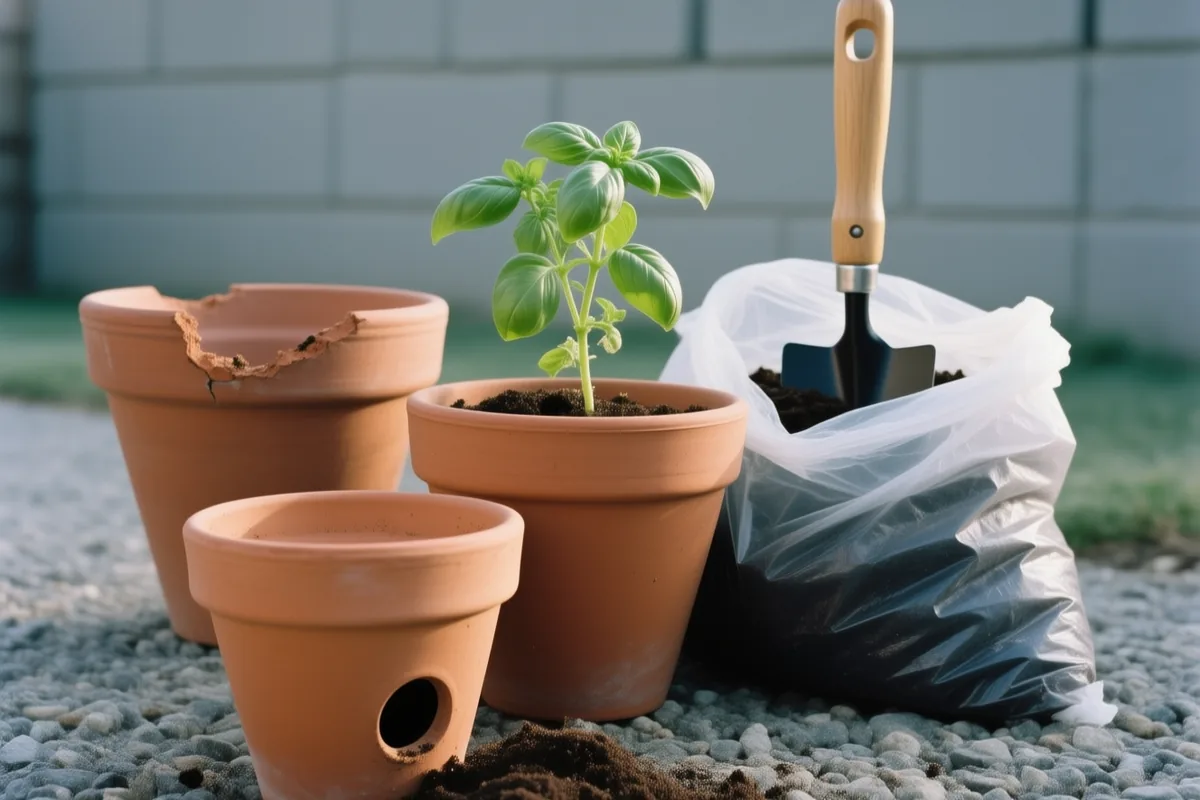
A pot is the smallest possible version of that idea, and everything difficult about container gardening follows from the boundary rather than from the plant.
The soils chart is a houseplant chart
Amazon’s Soils, Mulches and Planting Media chart, read this morning. Of the top fifteen:
- Number one is a cactus and succulent mix.
- Twelve of the fifteen are fertiliser or growing media, most of it explicitly for indoor plants — four separate Miracle-Gro feeds, four Miracle-Gro potting mixes, two cactus mixes, perlite.
- Not one bag of mulch, on a chart with mulch in its name.
- The three exceptions are a copper fungicide and two tubs of diatomaceous earth.
Two things follow. The first is practical: if you want mulch, bark or compost in quantity, this chart cannot help you — those are heavy, cheap, and bought by the cubic yard from a local yard. The chart sells what ships well.
The second is the useful one. The best-selling growing medium in the country is a fast-draining mix, and the chart around it is full of feed. That is not a coincidence, and it is the whole lesson of growing in pots.
A pot is a drainage problem with a plant in it
Ground soil buffers everything. It holds water and releases it slowly, it holds nutrients, its temperature barely moves, and roots go looking for what they need.
A container removes all four of those.
- Water either drains or it sits. There is no middle. A pot without a hole is a bucket, and a plant in a bucket drowns slowly in a way that looks exactly like underwatering — wilting leaves, and the instinct is to add more water.
- Nutrients leave every time you water. Whatever runs out of the bottom is gone. This is why a chart full of plant food sits beside a chart-topping potting mix.
- The temperature swings hard. A black pot in Phoenix sun cooks roots that would be perfectly comfortable at the same air temperature in the ground.
- The roots cannot go anywhere. Whatever is in the pot is the entire world.
So the order of operations for a beginner is not “buy a plant.” It is:
- A pot with a real drainage hole, bigger than you think. Small pots dry out fast and dry out unevenly.
- A mix that drains, which is what the chart’s number one already is.
- Feed, because the mix will run out and there is nothing underneath it.
- Then the plant, chosen to suit how often you will actually water.
Where these picks came from, honestly
All three read off Amazon’s own Soils, Mulches and Planting Media chart this morning — node 3752871 — rank, rating and review count together, best-sellers first. All three are research picks. The count of what is on that chart was done by hand; the point about black pots and root temperature is desert experience and is the one first-hand claim here.
The one honest warning
Do not put gravel, stones or broken crocks in the bottom of a pot “for drainage.” It does the opposite, and almost every gardening book printed before about 1990 told you to.
The reason is unintuitive and well established. Water moving down through a fine medium will not cross into a coarse layer until the fine layer immediately above it is fully saturated — a perched water table. Adding gravel does not lower the wet zone, it raises it, because the saturated band that would have sat at the very bottom of the pot now sits at the top of the gravel instead. You have shortened the pot and moved the swamp closer to the roots.
What actually improves drainage in a container is the mix itself — the grit, bark and perlite through the whole volume, which is precisely what the chart’s number one product is — and a hole that is not blocked.
If you want to stop mix washing out of the hole, a square of window screen or a coffee filter does it, weighs nothing and takes no volume.
This is the single most repeated piece of bad advice in gardening, it is still printed on packaging, and it is worth knowing that the number one product on the soils chart is the correct answer to the problem the gravel was supposed to solve.
The picks
Back to the Roots organic succulent and cacti mix, 6 quart
Number one on Amazon's Soils, Mulches and Planting Media chart this morning, 4.5 stars across four thousand six hundred ratings. The best-selling growing medium in America is a **cactus mix**, which is a coarse, fast-draining blend with sand and grit in it rather than a water-holding compost. That is worth pausing on, because it says most of what a beginner needs to know about pots.
- Best for
- Succulents and cacti obviously, but also anything in a pot with a lid-sized drainage hole, herbs like rosemary and thyme, and any container that sits in full sun.
- Watch out
- It is deliberately low in nutrients and drains fast, so a hungry crop — tomatoes, peppers, anything fruiting — will run out of both food and water in it. This is a mix for plants that would rather be too dry than too wet.
Rosy Soil houseplant potting soil, 4 quart
Number twelve, 4.6 stars across thirteen hundred ratings. Organic, built around biochar and worm castings rather than a peat base — the same small brand's answer for houseplants generally, sitting next to the chart's Miracle-Gro volume.
- Best for
- Indoor pots, anyone avoiding peat, and repotting a houseplant that has outgrown a bagged all-purpose mix.
- Watch out
- Small bag, and a short review record next to the chart's older names — thirteen hundred ratings against tens of thousands for the Miracle-Gro mixes on the same page. That is not a mark against it, but it is a shorter record to trust.
Miracle-Gro Shake 'N Feed all purpose plant food, 4.5 lb
Number eleven, 4.7 stars across sixteen thousand two hundred ratings — the most-reviewed slow-release feed on the chart. It releases over roughly three months, which suits the way people actually tend containers: intensively for a fortnight, then not at all.
- Best for
- Mixed ornamental pots, hanging baskets, and gardeners who know they will forget.
- Watch out
- Slow release is temperature-driven, so it feeds faster in heat — a pot on a west-facing patio in summer gets through it quicker than the box assumes.
We do not list prices; they change daily. The button opens the current Amazon page.