
Half the Plant Cover Chart Is Not About Frost
Ten of the twenty best-selling plant covers are frost cloth. Six protect tree bark. And the two with real review counts rank fourteenth and sixteenth.
Fimbulwinter is described as three winters in a row with no summer between them, and the detail that makes it frightening is not the cold. It is that nothing gets a chance to recover.
A desert frost is the opposite problem. It arrives for four hours, once or twice a year, and it takes out plants that survived a 115-degree August without complaint.
The chart is three different products wearing one name
Amazon’s Plant Covers chart, node 3563987011, read this morning. Sorted by what the product actually does:
| What it is | How many of the top twenty |
|---|---|
| Frost cloth, row cover, freeze blanket | 10 |
| Tree trunk and bark protection | 6 |
| Bird and insect bags for fruit | 3 |
| Burlap sold as a general garden fabric | 1 |
Exactly half the chart is frost protection. The rest is a category Amazon has filed together because all of it wraps around a plant.
That matters when you search “plant covers” in November and buy the number one result. The number one result is a fifty-pack of mesh fruit bags.
The two products people have actually used rank fourteenth and sixteenth
Read the review counts down the chart and it stops looking like a ranking at all:
- Ranks one through thirteen: the largest review count is 1,084. Most are in the low hundreds. Number eleven has 44.
- Rank fourteen has 3,434. Rank sixteen has 5,060 — the most on the chart.
Fifteen of the top twenty have fewer than a thousand ratings. A best-seller chart ranks on recent units moved, so in a category that only sells for about eight weeks of the year, a listing that launched last month with a few dozen sales can sit above a product that has been protecting gardens for a decade.
On a seasonal chart with small volumes, rank tells you what is selling this week and the review count tells you what has been tested. Read the second column, not the first.
The number that decides everything is buried in the title
Frost cloth is sold by fabric weight, in ounces per square yard, and it is usually the last thing in a listing name:
- 0.55 oz — light row cover. A few degrees. Passes enough light to leave on for days.
- 0.9 to 1.2 oz — the general-purpose weight. More protection, less light.
- 1.5 oz and up — hard-freeze fabric. Comes off in the morning.
Everything else on the listing — the star rating, the photograph of a tidy garden, the word “premium” — tells you less than that one number.
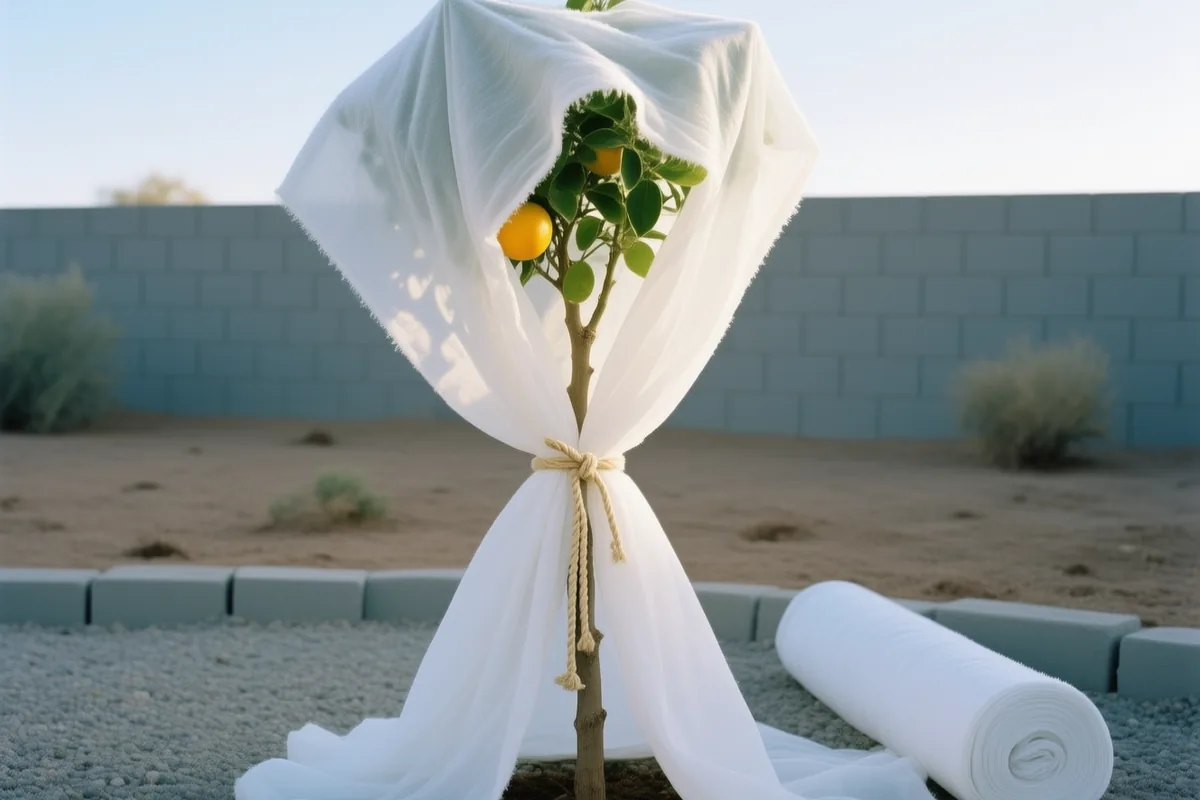
Two more things the packaging will not say. The cover has to reach the ground, because the warmth you are trapping is heat radiating out of the soil, not off the plant; a sheet draped over the top of a shrub like a tablecloth does almost nothing. And fabric touching a leaf conducts cold to that leaf, so the frost damage shows up in the exact pattern of where the cloth rested.
In Phoenix the tree wrap is for the sun
Six of the twenty products here protect bark, and in the low desert the reason to use them is not winter.
A young citrus, a newly planted fruit tree, anything with thin green bark — the south and west side of that trunk takes full afternoon sun with no canopy over it yet, and it splits. Growers deal with it by painting trunks white or wrapping them. It is the most common avoidable killing of a young tree here, and it happens in June, not January.
So if you came to this chart for frost and left with a trunk wrap, you did not make a mistake. You just solved a different problem, and probably a more likely one.
Where these picks came from, honestly
All four read off Amazon’s own Plant Covers chart this morning — node 3563987011 — rank, rating and review count together, best-sellers first. All four are research picks; we own none of them. The counts by product type were tabulated by hand from that top twenty and are the reason this piece exists. Nothing here is horticultural advice for your specific plants.
The one honest warning
The most-recommended product in this whole category is one you already own, and no chart will ever sell it to you.
An old bedsheet, a moving blanket, a cardboard box weighted at the corners. Every one of them holds soil heat as well as light frost cloth does, and for one or two nights a year in a mild-winter climate that is the entire job.
The case for buying fabric is real but narrow: it breathes, so it can stay on for days without cooking the plant; it passes light; it does not soak up rain and turn into a cold wet weight on the branches; and it comes in a size that actually covers a row. If your winter is two cold nights and a shrug, that case is thin.
And the honest caution on the seasonal listings themselves: this is a category where a brand-new listing with forty ratings can be sitting at number eleven in September. Buy the review count, not the rank.
The picks
Agfabric plant covers freeze protection, 10 ft x 50 ft, 0.55 oz
Ranked fourteenth, 4.5 stars across 3,434 ratings — the second-largest review count anywhere in this top twenty, and every one of the thirteen products ranked above it has fewer than 1,100. A 0.55 oz floating row cover is the light end of the range: a few degrees of protection, enough light through it to leave on for days, and long enough at fifty feet to cover a row rather than a single plant.
- Best for
- Vegetable rows and low beds, and anyone who wants to cover and uncover repeatedly through a cold snap.
- Watch out
- 0.55 oz is genuinely light. It buys you roughly two to four degrees, not ten, and light fabric that touches foliage transmits cold straight to the leaf it is lying on. Hoop it or stake it clear of the plant.
Valibe plant covers freeze protection, 10 ft x 30 ft, 0.9 oz
**Ranked sixteenth and the most-reviewed product on the whole chart at 5,060 ratings**, 4.4 stars. Nearly double the fabric weight of the Agfabric roll, which is the specification that actually decides how much protection you get. That a chart sorts it below fifteen products with a few hundred ratings each is the most useful thing on this page.
- Best for
- A harder freeze, and plants you cannot easily move.
- Watch out
- Heavier fabric passes less light, so this is a cover-at-dusk, uncover-in-the-morning product rather than something to leave on for a week.
Gardzen heavy duty plant covers with drawstring, 5 pack, 54 x 72 in
Ranked twelfth, 4.5 stars across 659 ratings. Shaped bags with a zip and a drawstring rather than flat fabric — they go over a shrub or a young citrus and pull closed at the trunk, which is the part everyone gets wrong with a flat sheet.
- Best for
- Individual shrubs and young trees, and anyone tired of chasing a blown-off sheet at six in the morning.
- Watch out
- Sized bags only fit what they fit. Measure the plant at its widest before buying rather than after, and remember the cover has to reach the ground to trap any warmth at all.
Spiral tree trunk protector wrap, 4 to 20 piece
Ranked fourth, 4.6 stars across 670 ratings, and it is on this chart as an example rather than as frost protection — it is a plastic spiral that guards bark from strimmers, rodents and sun. In the low desert that last one is the real job: young citrus and thin-barked trees split from **sunscald on the south-west side of the trunk**, which has nothing to do with cold.
- Best for
- Young trees with thin bark, and any trunk taking direct afternoon sun.
- Watch out
- A wrap left on a growing trunk girdles it. It comes off, or gets loosened, every year — and in a wet climate a tight wrap holds moisture against the bark, which causes the rot it was meant to prevent.
We do not list prices; they change daily. The button opens the current Amazon page.